The new TSA rules imposed after the Christmas Day bombing attempt aboard the Amsterdam to Detroit flight, an e-mail from friends thankful that they did not book the last (and ultimately canceled) flight of the day from Eugene to San Francisco at the end of the holidays, and watching George Clooney living life "Up In The Air" brought my own "No Fly" rules for air travel to mind. But first, here's a bit of my own personal aviation history.
My "Golden Age" of Air Travel
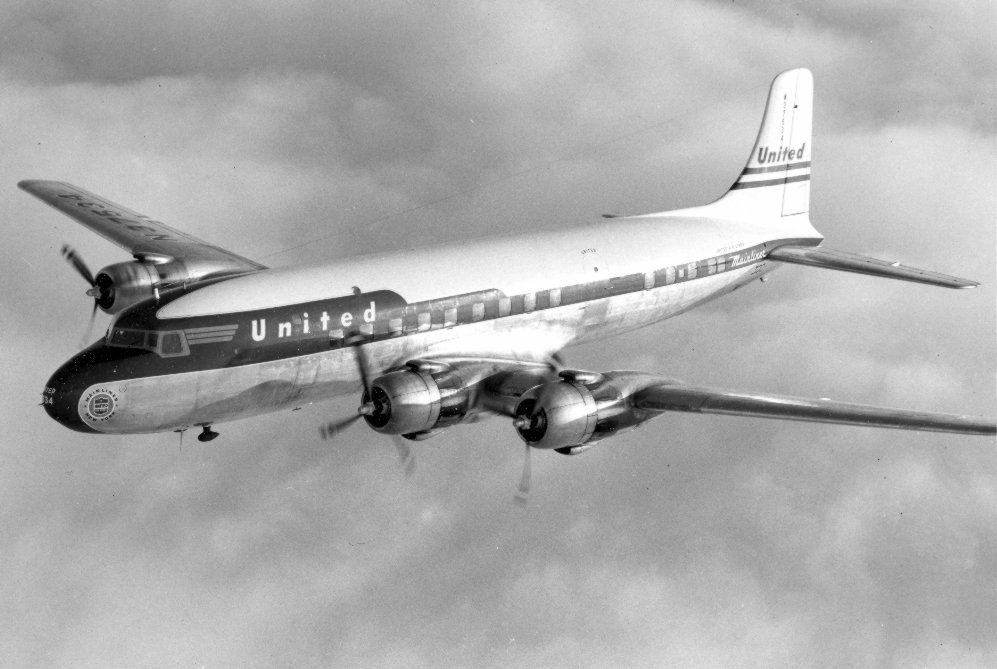
Like Clooney's movie character, Ryan Bingham, at age 7 (or maybe 8) I put on a suit, white shirt, and a tie, then accompanied my Mother out to SEA-TAC (the airport located about halfway between Seattle and Tacoma, Washington) to board my first airline flight. As the sun rose and its bright light glinted off the silver fuselage of the United DC-6, we climbed up the stairway that had been rolled across the tarmac to the plane, and entered the cabin to take our seats for the relatively short hop north to Vancouver, British Columbia. Unlike Bingham, I wasn't going there to fire employees from their jobs: This was strictly "leisure travel." It would be over a decade before I flew again.
On the eve of my twenty-first birthday, my parents took me out for dinner at Seattle's swank Olympic Hotel. (I had been there in my early teens, dancing in the Grand Ballroom to swing music with 14-year old girls wearing chiffon petticoats under their party dresses. A few years later I returned to the hotel ballroom for cotillions hosted by my college fraternity). My Mother tried to buy me an "almost legal age" celebratory drink, but the waiter took one look at my fresh face and politely declined to serve me, little knowing that I had on previous occasions imbibed wine and Metaxa brandy while watching belly dancers shimmy at an upscale Greek restaurant just a few blocks down Fourth Avenue from the hotel. It would be another two months before I had that first "legal" drink.
Leaving home just as you are about to "come of age" can't be fun for anyone. But for me it was a cursed evening: I was on my way to Air Force "boot camp" in San Antonio, Texas. We finished our Cherries Jubilee dessert (sans any quaff of cognac for me) at the Olympic, and then drove down to SEA-TAC. After hugs, kisses, and solemn good-byes, along with several other recruits I was marched aboard a Braniff 727, although I don't recall if it was one brightly adorned with the artwork of Alexander Calder.
In 1967, about 99.99% of all airline flight attendants were called "Stewardesses", perhaps a holdover from an earlier era when airplane cabins were staffed by nurses. In those days, you had to be female, young, svelte, sexy, and wear pantyhose and short, short skirts to land a job working as a "stew" for a commercial airline. The reason: The one-track minded men who ran the airlines viewed women as sex objects to be ogled by the men who made up the lion's share of passenger manifestos. (Rent the movie "Catch Me If You Can" to see why flight attendants of that era had to look like participants in a beauty queen contest). But it was irrelevant to me who would be serving meals and drinks aboard that flight, or what they would be wearing, since the Air Force Non-coms who escorted us to the plane had given the cabin crew an ultimatum: No booze (and, of course, no cavorting in the "mile high club") for those of us heading off to serve our country.
Just before Christmas I received a month's leave to go home and enjoy the holidays with my family before reporting to my first duty station. Clad in my blue Air Force wool winter uniform (with a single "Airman" stripe on its sleeves), I flew from San Antonio to Seattle, sitting quietly near the rear of the plane, sipping Scotch on The Rocks: The first alcoholic drink I had consumed since setting foot on Lackland Air Force Base on my birthday back in October.
Over the next two years, as the Vietnam War continued to rage in Southeast Asia, I would fly between Sacramento and Seattle, to and from Texas, from Travis Air Force Base in California to Okinawa south of the main islands of Japan, back to California for Christmas, north to Seattle, then on a Great Circle Route through Tokyo to Okinawa, and finally from there to Travis aboard a military flight packed with Department of Defense school teachers whose return home at the close of the school year in 1970 coincided with the end of my tour of duty in the Far East. Although the general public, hostile to the war that would claim thousands of American lives, looked at G.I.'s traveling in uniform with a jaundiced eye, the aircrews, stewardesses, and airline ticket staff treated us well, and we were almost "civilians" when it came to air travel.
I finagled a summer off from military service to return to Seattle to attend college, taking a couple of breaks during the school term to fly down to Lake Tahoe to visit my then-girlfriend (now-wife) who had a summer job there with the U.S. Forest Service. At the end of August, I went to Tahoe one last time, and then took a flight from Reno through Chicago to my next assignment at a Strategic Air Command base in Indiana.
Grissom Air Force Base (named for one of the original Mercury program astronauts who died in a launch pad fire aboard an Apollo moon-shot capsule) sat among the cornfields of central Indiana far from most of the towns in the region. To build morale among the troops, the Base Commander allowed us enlisted men to travel to California aboard the base's KC-135 tankers, the Air Force version of the civilian Boeing 707, designed for in-flight refueling of fighters and bombers. The trips departed on Fridays, the crew and "passengers" spent the weekend, and then returned to Indiana on Mondays. We sat in sling-seats hanging from the inside of the fuselage, just like paratroopers in those WWII movies you've seen, ate box lunches, and alternatively sweated to death or froze as the plane's unpredictable heating system switched on and off.
I took four such "Incentive Flights" west during the nine months I was stationed there. On one trip, I stood in the cockpit watching the snow-clad Sierra Nevada mountains grow larger in the plane's windscreen as we flew toward the California-Nevada state line. On another trip, when the plane flew over Lake Tahoe, I laid face-down in the cushioned area in the tail of the plane where a crew member would operate the boom that, like a very long hose from a gas pump, would sent jet fuel into the tanks of the plane flying behind the 135. Through the windows of that bed-like perch I could see the casinos at South Lake Tahoe, Emerald Bay on the west side of the lake, and Mount Tallac, whose summit I had reached the previous summer while hiking with my girl friend.
In June of 1971, discharge papers in hand, I wore my Air Force uniform (now bearing Staff Sergeant stripes on its sleeves) for the last time aboard an airliner. After touching down in Kansas City on a brief stopover for lunch and a gabfest with one of my former comrades in arms, I continued the flight I had begun earlier in the day in Indianapolis, reached San Francisco, went into the Men's Room at the airport, changed into "civvies", and tossed my military duds into the trash.
In the 1960's and 1970's, air travel in the U.S. was, in a word, fun. You could go out the airport, enter the terminal, wander around everywhere within it, loiter as long as you liked, and watch planes take off and land. At many airports you could obtain decent food and good service at sit-down restaurants; people went to those establishments to dine, even if they were not taking a flight. On board a plane, passengers in Coach were served a hot meal, even on short flights. None of the elaborate security measures we now take for granted were in place. The motto of the American travelling public at that time was: "Why drive when you can fly?"
And that's the way it was during my "Golden Age" of air travel.
(Tomorrow in Part 2 of "My 'No Fly' List" I'll discuss "The 'Modern Age' of Air Travel" and give you tips for "Making it All Better" when you travel by air).
![Reblog this post [with Zemanta]](http://img.zemanta.com/reblog_e.png?x-id=b1d7bb99-5f2e-4015-8ccf-5dd5ef86ad6f)




No comments:
Post a Comment